
Betradar Virtual Basketball Software and Feed Coverage
 Available in US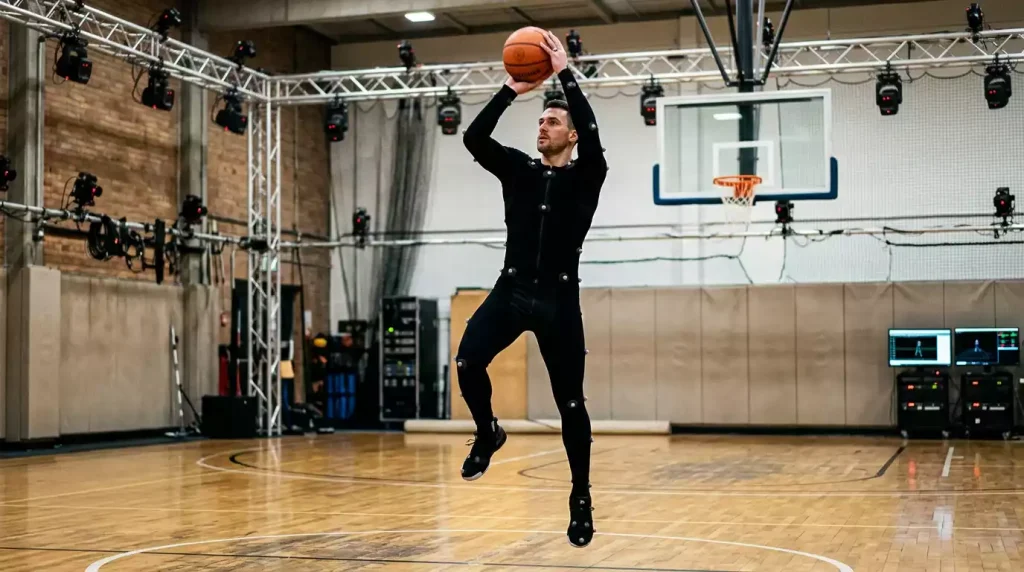
Exploring Betradar’s Dominance in UK Virtual Feeds
Open the virtual basketball section on a UK sportsbook and the brand on the screen says bet365, William Hill or Sky Bet. That branding tells you almost nothing about who actually built the match you are watching. In most cases, what is rendering on your screen was generated by a single B2B company headquartered in St Gallen, Switzerland – and operators across the country license the same product, the same league structure and the same RNG output from them.
That company is Sportradar, and the brand it uses for its sportsbook-facing services is Betradar. If you have ever wondered why virtual basketball looks suspiciously similar across three different operator apps, this is the reason. Understanding who builds the feed matters more than understanding which operator runs it.
Betradar as the Brand of Sportradar
The naming is mildly confusing on purpose. Sportradar is the parent company, listed on NASDAQ under the ticker SRAD, with a portfolio that covers data, integrity services, broadcasting tech and betting products across more than a million matches a year. Betradar is the brand it uses specifically for sportsbook services – odds, virtual sports, live data feeds. When a UK operator integrates “virtual basketball by Betradar”, they are licensing a product line within Sportradar.
The scale matters because it sets the economics of the product you are betting on. Sportradar serves over 900 operators across 120 countries through Betradar, which means the cost of building the underlying virtual basketball engine is amortised across an enormous customer base. A single set of leagues, a single RNG, a single motion-capture pipeline serves a betting shop in Romford and a sportsbook in Lagos. That is also why the product evolves slowly – changes ripple across hundreds of partners and have to be backwards-compatible with every operator’s integration.
League Structure: 16 Teams, 8 Parallel Matches
The virtual basketball league Betradar runs is tighter than people realise. The structure has been 16 teams playing in rotation, with eight matches running in parallel at any moment and a new wave kicking off roughly every four and a half minutes. The current Betradar product page lists eight parallel matches and around 3,330 fixtures per day – the difference between 2,400 daily fixtures in the original press materials and 3,330 today reflects tighter cycle pacing rather than a bigger league.
Sixteen teams is a deliberate number. It is big enough to give the product variety – you do not see the same two team names every cycle – but small enough that the engine can build a coherent “season” of results, a league table, a top scorer leaderboard. The aesthetic is league sport; the underlying maths is independent draws. Every team has the same long-run win probability against every other team after adjusting for whatever decorative form numbers appear on screen.
The parallel structure has practical implications for a UK punter. Eight matches running at once means the markets do not pause between cycles – there is always something live and something pre-match. It also means the operator’s promotional copy that says “matches every few minutes” is technically conservative; from your seat, a new betting opportunity is available roughly every thirty seconds across all eight parallel fixtures.
Inside the Motion-Capture Studio
The visuals you see on the stream are not generated from scratch by a graphics engine each cycle. Betradar built a motion-capture pipeline in a UK studio years ago, recording real basketball players performing every possible event – layups, three-pointers, blocks, turnovers, free throws. The captures use multiple cameras to record movement at a resolution the RNG-driven match can then call up event by event.
What this means architecturally: when the RNG draws a “team A scores from three-point range” event for the current possession, the engine selects an appropriate pre-recorded motion-capture clip, renders it onto the team’s player models, and ties it to the scoreboard. The result is a continuous video that feels like a basketball broadcast but is actually a sequence of cached animations stitched to RNG output.
Two consequences follow. First, the visual realism is genuinely high – these are real human movements, not character animations – which is why virtuals have moved well past the cartoony look of earlier generations. Second, what you see is downstream of the RNG draw, never upstream. You cannot read the visualisation for clues about the outcome because the visualisation is generated after the outcome is decided. This is one of the more persistent fair-play myths in the player community, and it is worth dispelling firmly.
Data Output and Operator Integration
Operators do not just license a video stream. The Betradar product hands them a structured data feed – match identifiers, market lists, current scores, time remaining, recent events – which the operator’s sportsbook engine consumes to display markets and accept bets. The video stream is one channel; the betting data is another, running in parallel and tightly synchronised.
This separation explains a few things UK players sometimes notice. When the stream lags behind the data, the betting interface might tell you a quarter ended a beat before the on-screen buzzer. When the data feed reconnects after a brief hiccup, the markets refresh while the video continues smoothly. The operator’s job is to wrap these feeds in a UK-compliant interface, manage payments and customer relationships, and add the responsible gambling tools required by the UK Gambling Commission. The match itself is not theirs to design.
That has consequences for the bonus question. Operators know exactly what their margin on Betradar virtual basketball is – the underlying mathematics are fixed by the provider – so excluding virtuals from welcome bonuses is a way of protecting a known mathematical edge. There is no surprise variance for the operator on this product, only on volume.
Scale: Operators and Countries Served
The reach of the Betradar virtual sports portfolio is genuinely industrial. Sportradar’s group portfolio sits behind a sports betting sector that its own CEO has projected to grow 10% to 12% per year over the coming decade – a forecast he framed at ICE Barcelona in January 2025, when he was talking explicitly about the convergence of data, visualisation and simulation. “Bringing together the data, the visualizations, the simulations, the understanding of the fans is the opportunity Sportradar is now attempting to seize.”
The B2B nature of this scale matters for the player. Because the same engine serves so many operators, certification only needs to happen once at the provider level – the RNG is tested against the UK Gambling Commission’s Technical Standards Document by an approved testing laboratory, and the certification follows the feed wherever it is licensed. UK operators rely on Betradar to deliver a pre-certified product; the operator’s own UKGC compliance focuses on customer-facing duties like KYC, deposit limits and marketing.
For comparison context, Inspired Entertainment’s virtual sports segment reported revenue of $9.3 million in Q3 2025 – a 17% year-on-year drop. That is a useful frame: Inspired is the second-largest virtual sports vendor visible to UK punters, and its quarterly revenue across the entire virtual segment is smaller than Sportradar’s group earnings across a fortnight. The B2B virtual sports market is concentrated, and Betradar holds the dominant position in UK distribution. For a deeper look at the alternative, my piece on Inspired Entertainment’s virtual basketball product covers the contrast.
Is Betradar the only virtual basketball provider used by UK operators?
No. Betradar is the most widely integrated, but Inspired Entertainment and Kiron Interactive both supply virtual basketball to UK-licensed operators, and a handful of smaller vendors appear on individual platforms. Bet365"s virtual basketball is sourced from Betradar; some retail-led brands run Inspired feeds; certain operators offer multiple providers within the same virtual basketball menu. Always check the operator"s information page if the provider is relevant to your decision.
Does Betradar set the odds, or does each operator?
Betradar supplies the underlying probability distribution from the RNG and a recommended odds set. Operators then apply their own margin and may adjust offerings – some UK sportsbooks run very close to Betradar"s suggested prices, others widen the overround on exotic markets. The match outcome is fixed by Betradar"s engine; the pricing you see is the operator"s commercial decision on top of that fixed engine.
Articles
Created by the "Virtual Basketball Bet" editorial team.
