
Identity and Age Verification for UK Virtual Basketball
 Available in US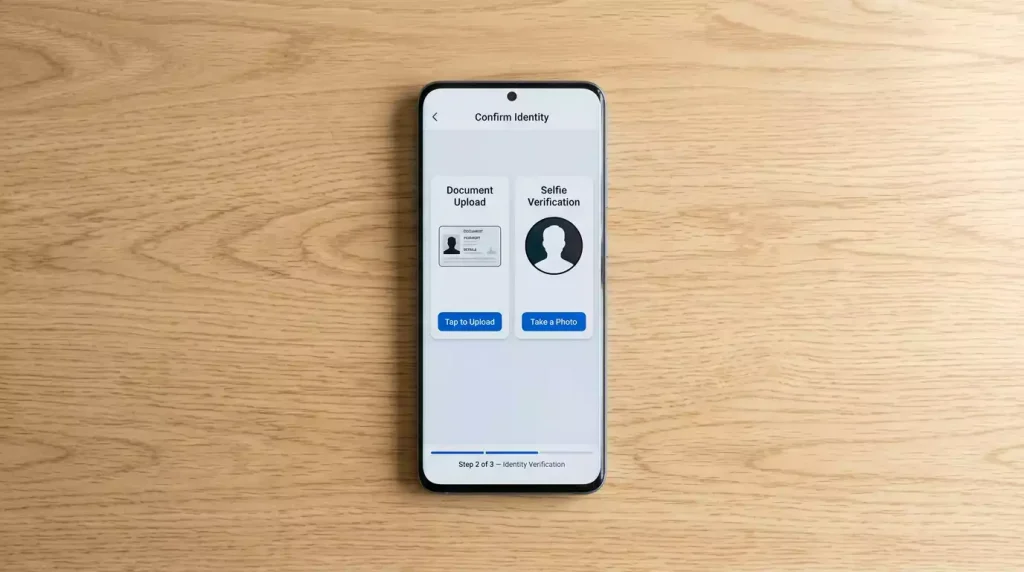
Passing Mandatory Identity Checks for Account Activation
Most punters who ask me about virtual basketball discover halfway through their first day that the operator wants documentation. The cycle speed of the product makes the verification interlude feel like a wall slammed across their evening, but the verification is doing work that protects the entire framework underneath. The five minutes of admin matter more than the five hundred bets that follow it.
The age and identity verification regime that UK Gambling Commission rules require operators to apply is one of the most underappreciated pieces of consumer protection in the gambling space. It is also one of the tightest in the world, and the friction is structural rather than incidental.
What the UKGC Requires Before You Can Bet
Under the Licence Conditions and Codes of Practice, UK-licensed operators must verify the age and identity of every customer before allowing significant gambling activity. The verification is a mandatory pre-bet requirement, not a post-bet reconciliation – the regulator’s rules tightened in 2019 to close a loophole where operators previously allowed deposits and play before completing checks and used the verification process to claw back winnings when ID was challenged.
The current requirement is that the operator must verify name, date of birth, and address before the customer can deposit or place any bet. The verification has to happen against an authoritative source – typically a credit reference agency database, an electoral roll check, or a passport/driving licence document scan – not against unverified customer declarations. The operator can require additional verification at higher activity levels, and almost always does so when the customer crosses thresholds defined in the operator’s risk model.
The verification must be completed before the operator can use any of the customer’s funds for play. A deposit made before verification is processed must be held in a verification-pending state and refunded to the customer’s source of payment if the verification cannot be completed. The asymmetric design is regulatory by intent – the operator cannot benefit from delaying verification, because any winnings during the delay period would be voided if the customer failed to verify subsequently.
Why Virtual Sports Specifically
The same verification framework applies to virtual basketball as to any other gambling product offered by a UK-licensed operator. There is no virtual-sports carve-out, no “this is just entertainment” exemption, no lighter regime for RNG-driven products. The licence requirements treat virtual basketball as gambling, and the gambling KYC regime applies in full.
The verification requirement matters particularly for virtual basketball because the cycle speed of the product makes it disproportionately attractive to underage players if the verification regime fails. A punter who can place a bet every four minutes for entertainment, with no apparent skill component, is exactly the kind of customer the regulator wants to protect with strong age gates. The 2020 demo-mode crackdown was driven by the same risk model – minors finding their way into virtual sports environments without verification was a recognised pathway into early gambling problems.
Andrew Rhodes, the Commission’s CEO, framed the regulator’s enforcement posture plainly: “Year on year we saw a 300 per cent increase in the number of criminal cases we were taking as a regulator.” The intensification covers both unlicensed operations and licensed operators that fail to implement KYC correctly. A licensed operator that allows underage play through inadequate verification faces regulatory action up to and including licence revocation, which is what gives the framework its actual force.
What Documents the Process Actually Requires
The typical UK-licensed operator’s KYC flow asks for documents in two waves. The first wave is at account opening: identity verification against a credit reference database using just the customer’s name, date of birth and address, often completed in seconds without any document upload required. About 70-80% of customers pass this electronic verification on the first attempt, with the remaining 20-30% prompted to upload supporting documents.
The supporting documents typically include a government-issued photo ID – passport, driving licence, or national identity card – alongside a proof of address that is no more than three months old. Bank statements, utility bills, council tax bills, and HMRC correspondence are the most commonly accepted address proofs. The operator’s customer service handles the upload review, with most reviews completed within 24 hours of receipt.
The second wave is at higher activity thresholds: source of funds verification. When a customer’s deposits or losses exceed levels defined in the operator’s risk model, the operator must verify the source of the funds being gambled. This typically involves payslips, bank statements showing income, employment confirmation, or evidence of other legitimate income sources. The thresholds vary by operator but typically activate at total deposit levels well below typical UK incomes – the regulator’s expectation is that the verification should kick in early enough to catch problematic patterns before they escalate.
Verification on Mobile vs Desktop
Mobile verification is typically smoother than desktop verification because the device offers more verification surfaces. The operator’s app can capture an ID document using the device’s camera, run face-matching against a live selfie, verify the device location to confirm UK presence, and pull verified address data from the customer’s mobile carrier if the customer authorises it. The full flow on mobile can complete in two to three minutes; the equivalent desktop flow typically takes longer because it depends on document upload and customer service review.
The speed dimension matters because Bet365 and Sky Bet each attract roughly 36% of UK online sports gamblers to open an account, with Bet365 the primary operator for around 20% of the cohort. The major operators have invested heavily in mobile-first verification flows because the volume goes through mobile, and the faster the verification, the lower the abandonment rate at the registration stage. The friction is regulatory; the smoothness within the friction is competitive.
The same authoritative checks happen on both channels regardless of which the customer uses. The mobile flow is faster and uses different surfaces, but the underlying verification standard is identical to the desktop flow. A customer who has verified on mobile does not need to verify again when they sign in on desktop with the same operator, because the verification is at the account level rather than the channel level.
What Happens If You Fail Verification
Failed verification triggers a defined process under UKGC rules. The operator must refund any deposits made in the verification-pending state to the original payment source, void any bets placed during the verification window (with stakes returned to the customer), and provide the customer with a clear reason for the failure and a route to dispute the decision. The customer is not allowed to continue playing while the failed verification is resolved.
The most common verification failure reasons are address mismatches, name variations between documents (Sarah Smith on one document, Sarah Jane Smith on another), expired documents, and document quality issues (blurred photos, missing edges, glare on the ID). Most of these are resolvable with a fresh document upload and a customer service exchange that takes a few days to complete.
The harder failures are situations where the customer is genuinely unable to verify – typically because they have used incorrect personal details at registration, because they live outside the UK and are attempting to play from there, or because they are on a self-exclusion register. These cases resolve into account closure rather than retry, with funds returned to the original source. The self-exclusion case is particularly common – a customer who registered for GamStop and then attempts to open a new account at any UK-licensed operator will fail verification at the GamStop check stage, and the failure will be permanent until the exclusion period ends.
The Data Trail KYC Creates
One underappreciated aspect of the UK KYC regime is the data trail it creates around responsible gambling enforcement. Every verified customer has a UKGC-aligned identity record at every operator they hold accounts with, and the operator must maintain that record under both AML rules and the LCCP framework. The data is what allows GamStop’s cross-operator self-exclusion to work, what supports the operator’s affordability checks at higher activity levels, and what gives the regulator the basis to investigate operator behaviour when complaints arise.
The Health Survey for England has found that 18.2% of online gamblers are at-risk or problem gamblers compared with 5.8% of all gamblers, and the higher risk profile within the online cohort partly reflects the cycle-speed dimension of products like virtual basketball. NHS England gambling clinic referrals reached approximately 2,000 in the six months to September 2024, up 130% year on year. The KYC data trail is what allows operators to flag concerning patterns early enough to trigger interventions, and the absence of equivalent data on unlicensed sites is one of the structural reasons the regulator pushes so hard on the licensed-unlicensed boundary.
For the customer, the data trail is also useful. A verified account at a UK-licensed operator is the entry point to all the consumer protection tools the regulatory framework provides. The same KYC record that the operator uses to flag affordability concerns is the record that lets the customer self-exclude through GamStop, lodge an ADR complaint, claim against the segregated customer funds in the rare event of operator insolvency, and verify their identity with a successor operator if they switch services. The five-minute verification at the start is the gateway to all of that infrastructure. For the broader regulatory context this verification sits within, my piece on UKGC virtual sports rules covers the full framework in detail.
Why does my operator need additional documents when I have already verified my identity?
The additional documents are usually triggered by an activity threshold rather than by any concern about your identity. UK operators are required to perform source-of-funds verification at activity levels defined in their risk model, and these checks typically activate at deposit or loss levels that the operator"s algorithm flags as warranting further documentation. The check is a regulatory requirement under both the LCCP and the operator"s anti-money-laundering obligations, not a discretionary operator policy.
Can I bet on virtual basketball before completing verification?
No. UK Gambling Commission rules require operators to verify name, date of birth and address before any deposit or bet activity can be processed. The 2019 tightening closed an earlier loophole where operators could allow play before verification and reclaim winnings on failed verification. The current regime is strictly pre-bet – if verification cannot be completed, the customer cannot play. Any deposit made in a verification-pending state must be refunded to the original payment source if verification fails.
Articles
Created by the "Virtual Basketball Bet" editorial team.
